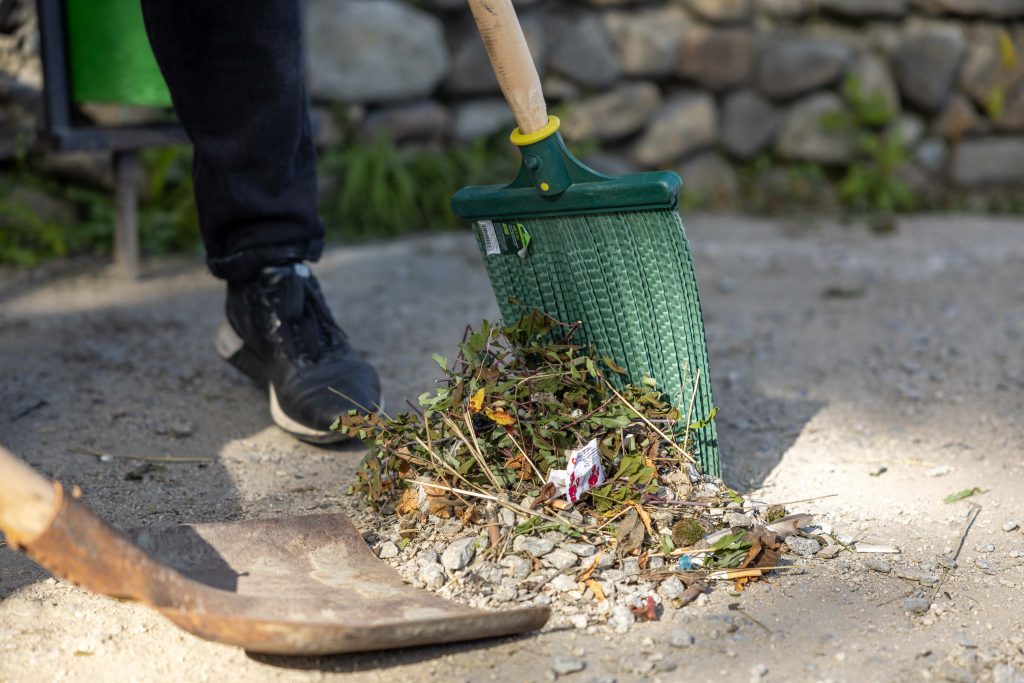
Yes, you can put almost all types of garden waste into a skip. Lawn clippings, hedge trimmings, leaves, branches, turf and topsoil are all widely accepted. However, strict weight limits apply to dense materials like soil and clay, and hazardous items are strictly prohibited.
Whether you’re doing a seasonal garden tidy-up, laying a new patio, or clearing an overgrown jungle, green waste accumulates faster than people expect. A few trimmed bushes and pruned tree branches can easily overwhelm a standard council wheelie bin before the weekend is even half over.
Hiring a skip is often the fastest, most practical way of getting rid of everything from fallen leaves to old garden sheds in one go.
But loading a skip with outdoor rubbish isn’t quite as straightforward as chucking everything over the side. Between council restrictions, weight limits on heavy materials like turf and soil, and strict environmental laws regarding treated timber and invasive plants, it pays to know the rules before you start digging.
Today, we explain what garden waste can go in a skip, what needs special handling, and how to choose the right skip size for your garden project.
What garden waste can and can’t go in a skip?
Most organic and landscaping materials are completely safe to load into a skip. However, waste transfer stations have strict guidelines to separate recyclable green waste from inert materials and hazardous substances.
Use this quick reference table to check your garden materials before hiring:
| Garden Material | Allowed in a Skip? | Key Conditions & Guidance |
| Grass Clippings & Leaves | Yes | Fully accepted; composted off-site into soil conditioner. |
| Pruned Branches & Hedge Trimmings | Yes | Cut longer branches down so they sit flush with the skip walls. |
| Tree Stumps & Thick Roots | Yes (with care) | Shake off excess soil; large roots take up bulk and add weight quickly. |
| Topsoil, Turf & Clay | Yes (conditions apply) | Permitted, but subject to strict weight caps. (Max skip size is usually 8 yards). |
| Paving Slabs, Bricks & Rubble | Yes | Classed as inert/hardcore; must be booked in appropriate weight-rated skips. |
| Untreated Timber & Fence Panels | Yes | Standard timber from old trellises, decking, or sheds is accepted. |
| Plastic Pots, Trays & Broken Tools | Yes | Permitted in general mixed waste skips (separate from pure green skips). |
| Garden Furniture | Yes | Accepted, but some upholstered outdoor furniture may have restrictions. |
| Creosote-Treated Wood | Restricted / Check | Older fencing treated with creosote is classed as hazardous under UK regulations. |
| Invasive Weeds (Japanese Knotweed, etc.) | NO | Strictly illegal to put in any standard or green waste skip. |
| Chemical Weedkillers & Pesticides | NO | Hazardous liquid waste requires specialist council disposal. |
| Petrol, Engine Oil & Lawn Mower Fuel | NO | Highly flammable hazardous waste is prohibited in all skips. |
Garden waste restrictions you need to know
While most greenery is fine, a few common backyard items trip up homeowners and can lead to rejected skips or extra disposal fees:
- Invasive plants: Japanese knotweed, ragwort, and Giant Hogweed
Under the Wildlife and Countryside Act 1981 and the Environmental Protection Act 1990, it’s an offence to spread or improperly dispose of controlled invasive species.
- Japanese knotweed can regrow from a fragment as small as a fingernail, meaning it will contaminate entire recycling loads.
- Never put Japanese knotweed, giant hogweed, or common ragwort into a skip, a council grass bin, or local compost facilities. These need an accredited specialist removal service.
- Treated and creosoted timber
Replacing an old garden fence or boundary line?
- Modern pressure-treated wood is generally fine for standard mixed-waste skips.
- Creosote-treated timber contains toxic polycyclic aromatic hydrocarbons (PAHs). If your timber smells strongly of tar or is stained dark brown/black from pre-2003 creosote, talk to your skip provider first, as it needs to be processed separately from clean wood waste.
- Hazardous fluids and garden chemicals
Tidying the shed often uncovers half-empty containers of weedkillers, moss killers, patio-cleaning acids, or leftover lawnmower fuel. Skips are strictly intended for dry, non-hazardous solid materials. Take hazardous fluids to a licensed household waste recycling centre equipped to store chemicals.
The ‘heavy materials’ trap
Garden waste might look harmless, but some of the heaviest materials you can put in a skip are commonly found during garden projects.
Soil, clay, turf, rubble, paving slabs and broken concrete can push a skip towards its maximum permitted weight surprisingly quickly. A skip that looks only half full could already be close to its safe transport limit if most of the contents are dense landscaping waste.
This matters if you’re digging out flower beds, removing an old lawn, or preparing the ground for a patio or driveway. Once soil gets in, it gets even heavier, and turf adds the weight of soil and roots while retaining moisture.
As a general rule, larger skips aren’t always suitable for heavy waste. Skip companies typically restrict soil, rubble, and other dense materials to skips around 8 yards or smaller, because a bigger one filled with these materials could be too heavy to lift and transport safely.
If your garden clearance involves a mix of bulky green waste and heavy materials, you may be better off separating them or considering grab-wagon hire instead.
When you book your skip, it’s always worth telling the company what you’re disposing of; that way, they can advise whether your chosen skip is the right choice.
What size skip do you need for garden projects?
The right skip size will depend on what you’re clearing and how much waste you’ll have.
- Mini skip: Sized around 2-4 cubic yards, it’s best for small garden tidies with grass cuttings, hedge trimmings, and a few old plant pots.
- Midi skip: Hire these for bigger seasonal clearances, removing shrubs or dismantling garden furniture. You’ll have room for bulky branches, fencing panels and general outdoor rubbish.
- Large skip: An 8-yard skip may be best if you’re replacing a patio, clearing an overgrown garden, or disposing of a mix of timber, soil, and rubble. But heavy waste restrictions will apply.
Why hire a skip instead of council green bins or the tip?
Council garden waste collections and household recycling centres are both useful options, but they aren’t always practical when you’re dealing with large amounts of garden waste.
A council green bin works well for everyday waste like grass cuttings, small branches and fallen leaves. The problem is capacity. One afternoon of hedge cutting can easily fill the bin, leaving you waiting until the next scheduled collection to get rid of anything else.
Some services also restrict what you can put in the bin. Soil, rubble, fencing and garden furniture typically all need a different disposal method.
Taking waste to the tip gives you more options, but let’s be honest, it’s a messy job. You need to load the waste into your vehicle, drive to the recycling centre, unload everything and potentially repeat the process a few times over.
Not ideal, especially when you’re dealing with muddy turf, loose soil or thorny branches you don’t want in the back of your car.
Hiring a skip puts the waste container directly where you’re working. You can clear rubbish as you go, keep the garden tidier and avoid repeated journeys in the car that are only going to be made longer with the roadworks that are always being done.
Convenience is the biggest advantage of hiring a skip for garden waste. You fill it, the skip hire company collects it, and it’s taken to an authorised waste facility where recyclable materials are separated for further processing.
What happens to garden waste after it’s collected?
Ever wondered where all those grass cuttings, branches, and piles of soil end up once your skip is collected?
The good news is that much garden waste can be recycled or repurposed instead of being sent to landfill.
Once your skip is collected, the contents are typically taken to an authorised waste transfer or processing facility, where staff sort and separate materials based on what you’ve thrown away.
Read what might happen to different types of garden waste:
- Grass, leaves, and hedge trimmings: Clean green waste can be shredded and composted, eventually becoming compost or a soil improver.
- Branches and untreated timber: These can be chipped for mulch, composting feedstock, or biomass fuel.
- Soil and rubble: Suitable, uncontaminated soil and hardcore can sometimes be screened, processed and reused in landscaping or construction projects.
- Plastic plant pots and garden furniture: Depending on the plastic type, they can be recycled and used for other purposes.
- Metal garden waste: Metal fencing, gates, and garden tools can often be recycled.
Of course, not everything that goes into a skip can be recycled. Heavily contaminated waste, or mixing it with unsuitable materials, can also affect it.
That’s why it’s always worth asking your skip hire company what they accept when you’re booking.
Can you put garden waste in a skip? A roundup
So, can you put garden waste in a skip? Yes, absolutely. From piles of grass cuttings and hedge trimming to unwanted fencing, old garden furniture, and even soil, a skip can make clearing your outdoor space much easier.
Remember to check for prohibited materials, be mindful of weight restrictions when disposing of soil and rubble, and choose a skip size that suits your project.
Got a garden project coming up? At Skips Liverpool, we offer a range of skip sizes to suit everything from small garden tidy-ups to larger landscaping projects across Liverpool and the surrounding areas.
Not sure which skip you need? Get in touch with our team, and we’ll help you find the right option for your project.
FAQs
Can you put grass cuttings in a skip?
Yes, grass cuttings can go in a skip; they’re classed as green waste and are usually composted after they’ve been collected.
Can you put soil and grass in the same skip?
Usually yes, so long as you’ve hired a skip that’s suitable for both materials. Be wary, though: soil is much heavier than grass cuttings, so the amount you can load may be limited. Check with your skip provider before you start to load.
Can you put tree branches in a skip?
Yes, branches, twigs and hedge trimmings are generally fine to put in a skip. Cut longer branches into smaller pieces so they don’t stick over the sides.
Can you put a lawnmower in a skip?
A manual push lawnmower is typically accepted, but petrol and electric ones need more care. Petrol mowers must be free of fuel and oil, while electric models are classed as electrical waste and need separate disposal.
Can you put a garden shed in a skip?
Yes, you can put a garden shed in a skip; it’s best to dismantle it first, though, or you won’t fit much else in.
Can you put wet garden waste in a skip?
Yes, wet garden waste can go in a skip. But be wary because soaking wet soil and turf will add a lot more weight to the skip.
Can I mix garden waste with household rubbish in a skip?
Yes, if you’ve hired a general mixed-waste skip that accepts both.
Is it cheaper to hire a skip or take garden waste to the skip?
It depends on how much waste you have and how many trips you’d need. Taking a small amount of garden waste to the recycling centre may cost less if you transport it yourself. But for larger clearances, hiring a skip is more convenient and saves time on loading and unloading, as well as petrol costs.