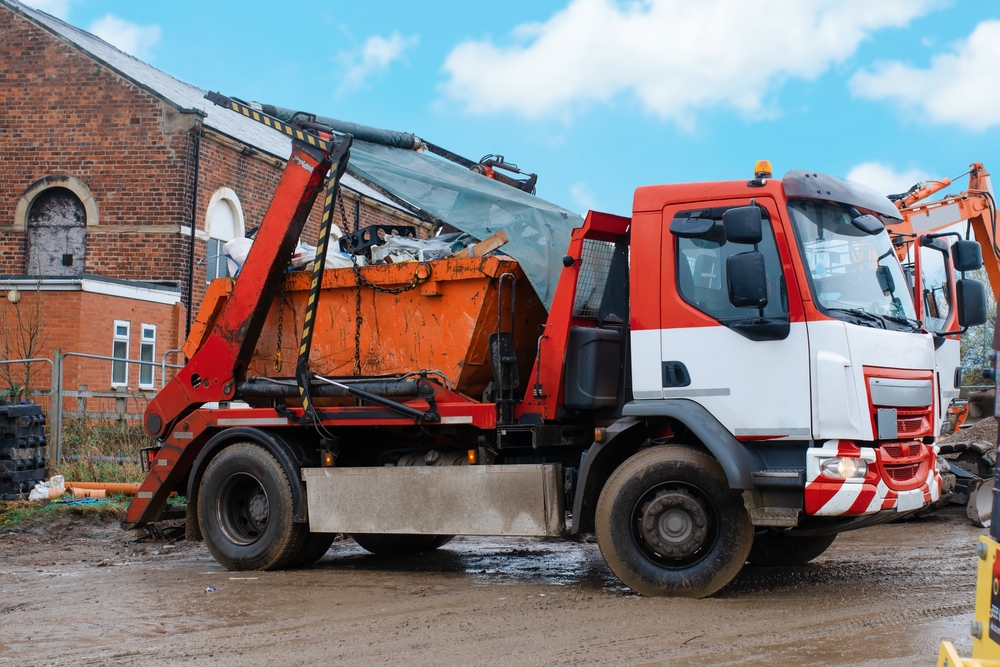
When the waste starts piling up, the big question is not always “How do I get rid of this?” Sometimes, it’s “Do I need grab hire or skip hire?”
Whether you’re cleaning out a house, tackling a garden project, renovating a kitchen, or dealing with rubble from building work, choosing the right waste removal option can save you time, money and a fair bit of stress.
Skips are the familiar favourite: delivered to your site, filled at your own pace, and collected when you are done. Grab hire, on the other hand, is built for fast removal or loose, bulky or heavy waste, with a grab lorry doing the lifting for you.
So, which is better for your project? Well, it depends on a few things, what’s being thrown away, space availability, and whether your waste is scattered or contained.
We’re here to help you decide between skip hire and grab hire, so read on to find out what makes sense for you.
Key Takeaways
- Skip hire is best when waste builds up gradually, such as during house clearances, DIY renovations, garden projects or longer refurbishments.
- Grab hire is better for large, heavy waste that is already piled up, including soil, rubble, hardcore, bricks and concrete.
- Skips offer more flexibility, as you can fill them at your own pace and keep waste safely contained on-site.
- Grab hire can save time and labour, as the lorry’s hydraulic arm does the heavy lifting for you.
- The right choice depends on your waste type, access, space and timescale, so it’s worth checking these before booking.
What is skip hire?
Skip hire is an easy way to manage waste. A skip is delivered to your home, site, or commercial premises, giving you a safe and convenient way to dispose of your waste. Once it’s full, the skip is collected, and the waste is emptied.
The biggest advantage of skip hire is flexibility. You don’t need to have all your waste ready in one place to go, and you can fill it over a few days. Plus, they come in different sizes, so you can pick the right size skip for your project.
Common projects that suit skip hire
Skip hire suits certain projects; this is where you might consider using them:
- Where waste is produced over a few days, and waste can be loaded at your own pace
- Where there is a mixture of materials
- Longer renovations to keep everything organised and reduce mess
What is grab hire?
Grab hire is a waste removal service that uses a specialist grab lorry fitted with a hydraulic arm. Instead of having a skip delivered and filling it by hand, your waste is left in an accessible pile, and the grab lorry collects it directly from the site.
Grab hire is best for large, loose and heavy waste. As long as the lorry can safely access the area and reach it with its arm, it can clear bulky materials efficiently with no need for a skip hanging around for weeks.
Common projects that suit grab hire
Grab hire is best suited to projects:
- Where waste is already piled and ready to be collected
- Heavy materials that take a lot of manual effort to get in the skip
Grab hire vs skip: The main differences
When you’re deciding between grab hire or skip hire, there are differences to consider for each option. Here’s what you should think about:
Timescale
Skip hire is ideal for projects where waste builds up gradually. If you are renovating a room, clearing a house, tidying a garden or working through a longer project, having a skip on-site gives you the freedom to load it as you go.
Grab hire is better suited to jobs where all the waste is already ready for collection. If you have a pile of soil, rubble, hardcore or construction waste that needs to be cleared quickly, a grab lorry can often remove it in one visit.
Capacity
Grab lorries can be a practical option for large volumes of loose waste, especially on construction, landscaping or groundwork projects. Designed to collect heavy materials in bulk, they make sense when you’d repeatedly fill skips.
Skips, however, are ideal for small and medium-sized jobs. There are different skip sizes available, and you can choose according to how much waste you’re going to have. It’s obviously kept away and tidy within the skip too.
Loading and labour
With skip hire, the waste needs to be loaded into the skip by you, your team or your contractor. This is usually fine for general household waste, garden waste or renovation rubbish, especially when the skip is close to where the work is happening.
Grab hire reduces the need for manual loading. As long as the waste is accessible, the hydraulic arm on the lorry does the lifting for you. This can be a big advantage when dealing with heavy materials such as soil, rubble, or hardcore, where loading everything by hand would take far more time and effort.
Access and space
Skips need a safe place for delivery and collection. This could be a driveway, private land, a forecourt, a yard or, with the right permission, a road or public highway. There also needs to be enough room for the skip lorry to safely drop off and collect the skip.
Grab lorries also need good access, but in a different way. The vehicle must be able to get close enough to the waste pile for the hydraulic arm to reach it safely. If the waste is behind a wall, under trees, too far from the road or blocked by parked cars, collection will be more difficult.
Permits and placement
If a skip is placed on private land, such as a driveway or site yard, a permit is not needed. However, if you’re putting it on a road, pavement or public highway, a permit will normally be required from the local council.
This is an important point for Liverpool homes, especially terraced homes, busy streets or sites with limited driveway space. Skips Liverpool can help advise on placement and assist with permits where needed, making the process much easier from the start.
Cost
Unfortunately, there isn’t a single answer as to whether skip hire or grab hire is cheaper. Costs depend on the amount of waste, the type of material, access to the site and how long you need it for.
Grab hire is great if you have large amounts of heavy waste, because they can often get it in one trip. Skip hire is better suited for smaller jobs, or ongoing work where you need time to fill the skip.
Take your time when deciding, otherwise you’ll pay too much for capacity or extra collections.
Waste type
Skip hire is often the better option for mixed household waste, garden clearances, renovation waste, old furniture, packaging, timber, tiles and general building rubbish. It keeps everything contained and gives you time to sort through the job properly.
Grab hire is commonly used for loose, heavy materials such as soil, rubble, hardcore, concrete, bricks and muckaway waste. It is especially useful when the material is already piled together and easy for the grab arm to reach.
Remember to check what can and can’t be collected before you book. Certain items could need specialist disposal.
When is skip hire the better choice?
Skip hire is usually the better choice when you want:
- Flexibility
- Control
- A safe place to store waste
A skip is best for those jobs when you’ll be creating waste over a few days or weeks. You’ve got one safe place where the waste is contained and ready to be collected.
When is grab hire the better choice?
Grab hire is usually the better choice when:
- There is a large amount of loose, heavy waste that’s already piled up and ready to go
- Grab lorry grabs the waste so it’s less labour intensive
- For jobs where you can’t have a ski taking up space
- Practical solutions when you have a short deadline and waste can’t be around for long
Choose grab hire when the waste is heavy, loose, accessible and ready for immediate collection.
Grab hire vs skip hire: Quick comparison
| Factor | Skip Hire | Grab Hire |
| Best for | Domestic clearances, DIY renovations, garden tidy-ups, office clearances and smaller building projects | Large loads of loose, heavy waste from construction, landscaping, groundwork and site clearances |
| Timescale | Best when waste builds up gradually over several days or weeks | Best when all waste is ready to remove in one quick collection |
| Capacity | Available in different sizes, including mini, midi and builders’ skips | Suitable for large volumes of loose material |
| Loading | Filled by the customer, contractor or site team | Loaded by the grab lorry’s hydraulic arm |
| Labour required | More manual effort needed | Less manual loading required, provided the waste is accessible |
| Access needed | Needs space for safe delivery, placement and collection | Needs vehicle access and enough reach for the grab arm |
| Placement | Can be placed on a driveway, private land or road with the correct permit | Waste is usually piled in an accessible area for collection |
| Permits | Usually not needed on private land, but normally required on public roads or highways | Usually no skip permit needed, but access and site safety still matter |
| Waste types | Mixed household waste, garden waste, renovation waste, timber, tiles, packaging and general rubbish | Soil, rubble, hardcore, bricks, concrete, muck away waste and loose construction materials |
| Cost considerations | Often better value for smaller, mixed or gradual projects | Can be cost-effective for large, heavy loads ready to collect in one go |
| Main advantage | Flexible, contained and easy to use over time | Fast, efficient and reduces manual loading |
| Main limitation | You need to load it yourself and have somewhere suitable to place it | Waste must be accessible and ready before collection |
Which option is best for your project?
The best choice depends on how your waste is being created, what type of waste you have, and how quickly you need it done.
Choose skip hire if your waste will build up gradually. This is usually a better option for house clearances, DIY renovations, garden tidy-ups, bathroom refits, kitchen projects and general rubbish removal.
Choose grab hire if you already have a large pile of loose, heavy waste ready to collect. This is often the better option for soil, rubble, hardcore, bricks, concrete and muck away jobs.
Basically, a skip is best when you want flexibility and grab hire is best when you want speed.
Need help choosing the right waste removal option?
If you’re still weighing up grab hire or skip hire, the easiest next step is to speak to your local waste removal team. A few simple details can usually help identify the best option, including what type of waste you have, roughly how much there is, where it’s located and whether it needs to be cleared sooner rather than later.
Skips Liverpool can help you choose a suitable skip size for your project, no matter what you’re undertaking. The team can advise on placement, access and whether a permit may be needed if the skip has to go on a public road.
Whether your project is big, small, domestic or commercial, choosing the right waste removal option from the start makes the whole job much easier.