

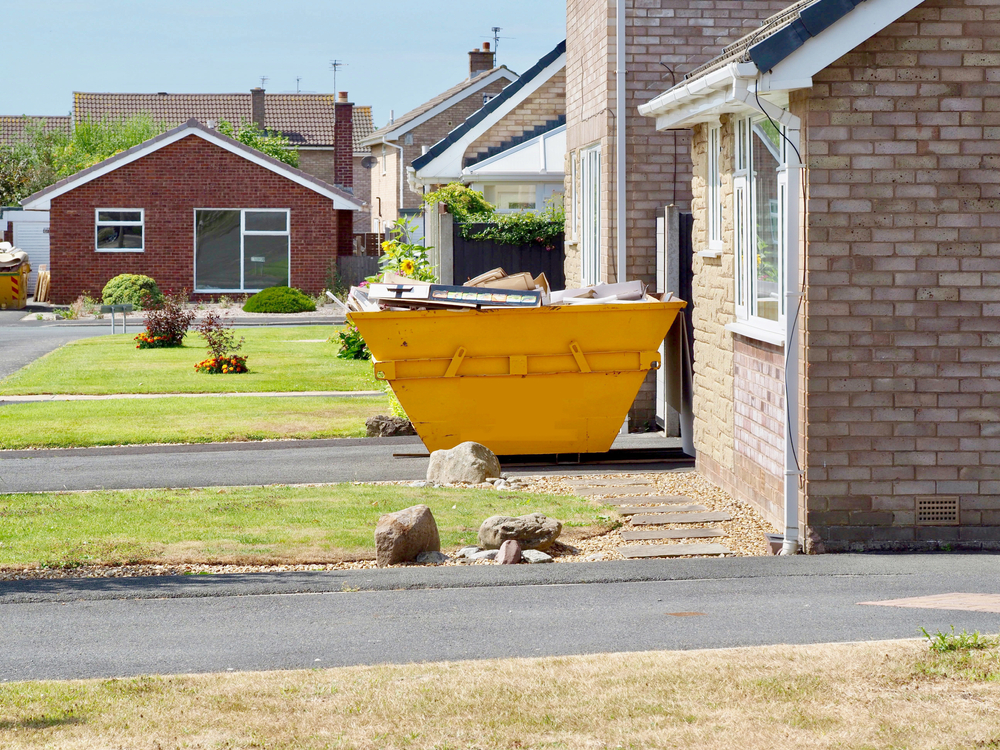
Lots of people spend their hard-earned money hiring a skip for ease and convenience, only to waste space by throwing things in randomly, leaving gaps in the wrong places, or loading above the fill line.
A barely loaded skip can leave you wasting valuable space, hiring a second skip unnecessarily, or having to remove materials before collection. It can also create a transport risk.
The DVSA says it encounters around 2,000 vehicles each year with insecure loads, and its guidance makes clear that all loads must be secure, regardless of vehicle type or journey length.
Whether you are clearing out a house, stripping out a kitchen, or managing waste from a building project, the basics are the same. Start with the right skip size, load it in a sensible order, and keep everything level and secure. Done properly, that helps you make better use of the space and avoids the common problems that lead to overfilling, wasted money, and collection delays.
Key takeaways
- Loading a skip properly is about order, balance and safety, not just fitting in as much as possible.
- The right skip size makes the whole job easier and helps avoid overfilling.
- Heavy and flat items should go in first to create a strong base.
- Breaking waste down before loading helps you use the full shape of the skip.
- Smaller items should be used to fill gaps, corners and spaces between bulky waste.
- A level skip is safer to collect and less likely to cause delays.
Start with the right skip size
Choosing a smaller skip to save money will only cost you more time and money in the long run. While it’s the cheaper option upfront, it’s a false economy when the skip fills up faster than expected.
In England, total household waste reached 21.9 million tonnes in 2024, of which 12.3 million tonnes were residual waste. While construction and demolition jobs generated 63 million tonnes of non-hazardous waste in 2022. The point is simple: waste builds up quickly, especially on renovation and clear-out jobs.
Before booking, consider the volume and type of waste you need to remove. Heavy materials like bricks, rubble, soil and concrete are going to fill it faster than you’d expect. Bulky items will waste space if they’re not broken down. Starting with a skip that’s just big enough leaves little room for awkward items or last-minute waste once you get going.
What “properly loaded” actually means
Proper loading is about using the available space you have sensibly, not cramming everything in, while keeping the contents secure and level.
A properly loaded skip means:
- Making full use of the base first
- Keeping the load flat and stable as you go
- Never fill the skip above the top edge or the marked fill line
- Putting weight in the right places
What to put in first
One of the best ways to load a skip properly is to think of it like a puzzle rather than a bin. Instead of tossing things in as they come, start with the heaviest, flattest, and bulkiest items first. This gives you a strong base to build from and makes it much easier to use the rest of the space effectively.
Consider this order when you’re putting things in a skip:
- Flat items first
These will sit neatly across the bottom of the skip. Things like timber, boards, broken cabinets, paving slabs, and flattened furniture panels can be arranged to give you a stable foundation. Once you’ve got those items in place, smaller waste can be loaded around and on top with far less wasted space.
- Large items against the side
Placing large items along the sides of the skip helps define the load’s shape and prevents bulky objects from sitting awkwardly in the middle, where they might create gaps that are difficult to fill later.
Common mistake: Throwing lightweight bags of waste at the start. This creates a soft, uneven base that shifts under heavier items and leaves air gaps throughout the load, which makes it harder to stack properly. Heavier items might crush and split bags, too, which creates a messier, less stable skip.
Breaking down waste before it goes in
Don’t waste skip space before you’ve even started to fill it. If you leave bulky items as they are, they’re going to take up a lot of space with their strange shapes, which you need to stack around.
Break waste down so you make better use of your skip.
- Old wardrobes, shelving units, tables and cupboards should all be dismantled.
- Cardboard boxes, cartons and protective wrapping should be flattened
- Pieces of timber, pipes or panels that overhang should be cut down first if it’s safe to do so
Spreading the weight evenly across the skip
Loading a skip properly isn’t just about how much you can fit in it. It’s about the balance of weight across the container. If everything is piled to one side, it’s harder to collect and less efficient for the space you have available.
Dense materials should be spread across the base rather than dropped in one corner or stacked in one end. This gives you a stable foundation and helps the load level.
Mix bulk waste with compactable items as you go. This makes the best use of the skip’s capacity and its shape, rather than leaving awkward gaps that can’t be filled later.
An uneven load isn’t just inefficient; it makes the skip less safe to transport. If you spread the weight evenly, it’s easier for the collection team to deal with and you have a better chance of using the available space from the bottom to the top of the skip.
Fill gaps with smaller waste, but don’t just chuck it in
Once you’ve built a solid base with heavier, flatter items, the next step is making use of the smaller spaces that naturally appear around them.
- Side gaps, corners, and spaces between bulky items are ideal for smaller waste. Use compact items to fill these gaps as you go.
- Bagged waste can be useful for tucking between larger items and plugging these spaces. It helps reduce dead space and supports an even load.
- Don’t just drop waste in the middle to form a mound. Regularly look at how the load is sitting and work out where smaller items can be placed most effectively.
Watch the fill line
One of the most common problems with skip hire is overfilling. It usually happens on the last day, when a few extra items are left over, and it’s tempting to pile them on.
The problem is that waste shouldn’t sit above the top edge of the skip.
What looks like a minor addition on site can create a real issue when the skip is lifted and taken away.
A properly loaded skip should be full but still flat across the top. Overfilling can lead to practical problems:
- Collection may be delayed
- The skip may be refused
- You might have to empty the skip
Heavy materials need extra care
Not all waste behaves in the same way; heavy materials need to be treated differently from general bulky waste. Soil, rubble, bricks, tiles and hardcore may not always look like they take up much room, but they build weight very quickly once they start going into the skip.
This is why a skip can appear only half full and still be carrying a heavy load. With dense materials, the issue is often not how much space remains, but how much weight has already been added.
Heavy waste means you need to think about space and waste simultaneously. You’ll still need to load neatly and evenly, but you also need to be realistic about how quickly dense materials can add up.
The best approach is to spread heavy waste across the base and avoid assuming that visible spare room means the skip can take much more. For jobs involving brick, soil, hardcore, or similar materials, choose a skip suited to heavier waste.
Best loading tips for household clear-outs
Household clear-outs often create a messy mix of waste types, which is why a bit of structure can make a big difference:
- Start with broken-down furniture and other flat items to create a stable foundation at the bottom of the skip
- Use soft furnishings, black bags, bedding, toys and clothing for smaller gaps between the larger items
- Break down bed frames, curtain poles, shelves, etc, that bridge across the skip
- Layer waste sensibly rather than throwing everything in as it comes out of the house
Best loading tips for trade and renovation waste
Trade and renovation waste is very different to household rubbish, so it helps to load it with the job in mind:
- Where you can, keep heavier materials separate from lighter general waste. Treating them the same leads to poor space and weight capacity.
- Timber lengths, boards, panels and dismantled units should all go in first
- Don’t throw in long lengths diagonally, cut down where it’s safe, or lay in a way that follows the shape of the skip
- Load with an order in mind for the job at hand, so you don’t have to rearrange halfway through
When it’s better to book a bigger skip
Sometimes the issue is not how the skip has been loaded. It’s simply that it’s too small.
If you’re planning a small tidy, a 2-year skip may be enough. For moderate clear-outs, refits and renovation work, a 4-yard skip is a practical choice. Larger jobs or projects that give mixed builders’ waste may be better with an 8-yard skip.
Loading a skip properly is not about piling waste as high as possible and hoping it all fits. It’s about order, balance and making the most of the skip from the base upwards.
If you’re planning a clear-out, renovation, or trade job, choosing the right skip size from the start makes all the difference.
Need a skip without the hassle? Book with Skips Liverpool for reliable local skip hire, straightforward advice, and quick delivery for domestic, commercial and renovation waste. Speak to our team today, and we will help you choose the best skip for the job.
FAQs
Can I load a skip above the top edge?
No, waste shouldn’t sit above the top edge or the fill line of the skip. It needs to be transported safely, and overfilling stops this.
What should go in the bottom of a skip first?
Heavy, flat and bulky items should go in first. Things like timber, boards, paving slabs, and broken furniture panels will give you a stable base.
Does breaking items down really save that much space?
Yes, taking the time to break down furniture, flatten boxes and cut awkward lengths makes a noticeable difference.
Can heavy waste fill a skip before it looks full?
Yes, dense materials will add lots of weight quickly. You might have only partially filled it, but the weight will be there with things like soil, bricks, rubble and tiles.
What happens if a skip is overloaded?
If you overload the skip, it might be too dangerous to move, so the collection team might refuse to pick it up until some of the waste has been removed.
Which skip size is best for a home renovation?
It depends on the scale of the job and the type of waste. A single room rip-out might just need a 2-yard skip, but for multiple rooms being decorated or cleared out, a 4-yard or 8-yard skip might be ideal.
Leave A Comment