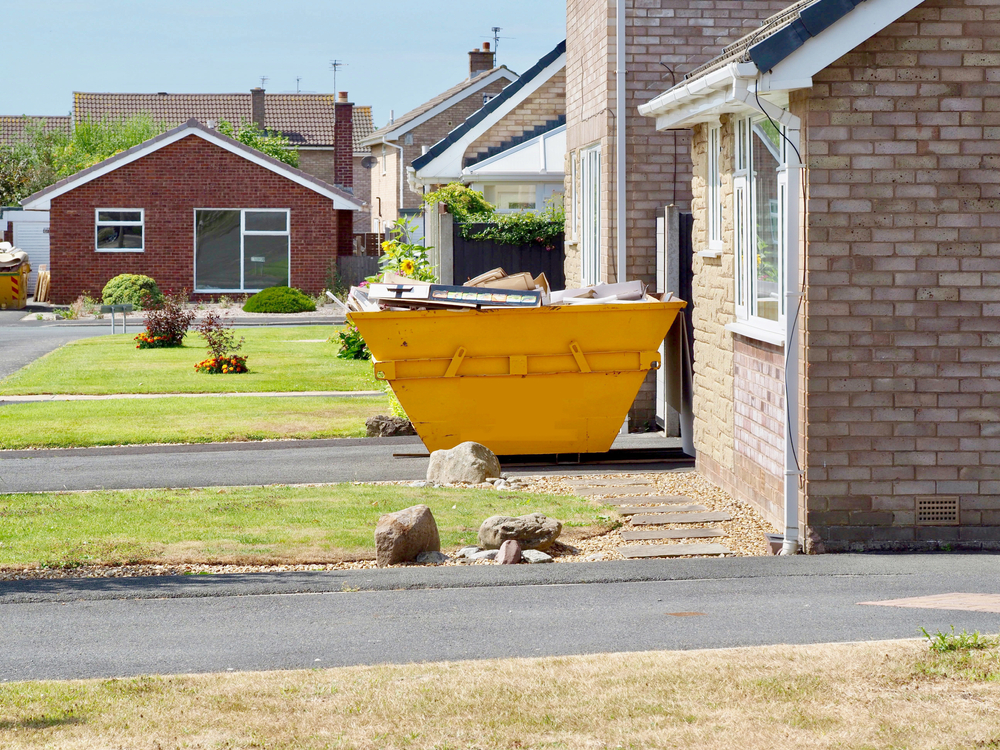
You’ve spent thousands on your driveway; the last thing you want to do is bring in a big metal skip and dump it on it. But sometimes, it’s the easiest way to get rid of a tonne of rubbish/waste from your home, without the headache of skip permits.
The good news is that a skip shouldn’t damage your driveway. That is, it needs to be placed correctly, and you should take a few simple common-sense steps.
At Skips Liverpool, our experienced drivers deliver skips safely every single day without leaving a scratch, but knowing how to prepare your property makes all the difference.
In this guide, we’re going to put your mind at ease. We’ll explore how different materials react to the heavy weight, share our top five proven tips for protecting your surface and explain exactly what to do if your driveway simply isn’t suitable.
The hidden culprit: It’s not just the skip
Surprisingly, the skip itself isn’t always the biggest risk to your driveway. The skip lorry can put just as much pressure on the surface during its delivery and collection.
When a skip is lifted on or off the truck, the driver deploys stabiliser legs to keep the vehicle steady. These concentrate a lot of weight onto a relatively small area, which can crack paving or leave indentations on softer surfaces.
That’s why experienced skip hire companies take care during delivery. Skip drivers should be trained to use spreader plates beneath the stabilisers, spreading the load across a larger area and reducing the risk of damage.
How different driveway materials react to heavy skips
Not every driveway reacts to a loaded skip in the same way. Some surfaces can handle the weight comfortably, while others need a little more protection.
Block paving
Block paving looks great, but the individual blocks typically sit on a sand base that can shift under heavy pressure.
A loaded skip can cause blocks to sink, become uneven or occasionally crack, particularly if the driveway wasn’t laid with heavy loads in mind. Putting timber boards or suitable protection underneath the skip spreads its weight instead of concentrating it on a few blocks.
Tarmac & Asphalt
Tarmac is more flexible than concrete, so heavy skips can leave scuffs, dents, or indentations.
Be especially careful in hot weather. Tarmac softens when it gets warm, so a heavy skip sitting in the same position on a sunny summer day is much more likely to sink into the surface. Boards under the skip will distribute the weight and reduce this risk.
Resin
Resin-bound driveways are strong, but concentrated weight can still damage them.
The main risk is indentation, cracking, or surface marking, especially if the resin has been laid over a weaker base or the skip is left in the same spot for a long time. Like tarmac, resin surfaces can soften slightly in very hot weather.
Like tarmac, you’re best laying the skip onto timber boards rather than directly on the resin. Avoid scraping or dragging the skip on the surface when it’s being delivered too.
Concrete
A properly laid concrete driveway is generally one of the safest surfaces for a skip because it can handle considerable weight.
The weak spots are usually around the slab’s edges. Placing a heavy skip too close to an unsupported edge can cause it to crack or crumble. Damage can also occur if you drag a skip across the concrete instead of lifting it into position.
Where possible, the skip should sit centrally on a sound section of the driveway.
Do you have a brand-new driveway?
If you’ve only just had your driveway installed, it’s worth being extra cautious.
New concrete needs time to cure and can take around 28 days to reach its full design strength. Fresh tarmac can also remain relatively soft for months after installation, particularly in warm weather.
Putting several tonnes of skip and waste on either surface too soon can leave permanent marks or cause more serious damage. If your driveway is brand new, tell us before booking a skip. It’s probably best to choose another suitable location rather than taking the risk.
Is my driveway suitable for a skip?
Most driveways can take a skip with the right preparation, but it’s worth giving yours a quick check before delivery day.
| Check | Usually fine | Potential problem | What to do |
| Driveway surface | Sound concrete, established tarmac or well-laid block paving | Cracked paving, loose blocks, soft tarmac or damaged resin | Tell us when booking so we can advise on the safest position |
| Age of driveway | An established surface that has had plenty of time to settle | Brand-new concrete, tarmac or resin | Avoid putting a heavy skip on it until the installer confirms it is ready |
| Slope | Flat or only gently sloping | A steep or uneven driveway where the skip may not sit securely | Speak to us before delivery – another location may be safer |
| Drains and covers | A clear area of solid driveway | Manholes, inspection covers, drains or other weak points beneath the skip | Choose a position away from them |
| Driveway edges | Skip can sit well inside the driveway | Position is close to an unsupported edge, kerb or crumbling section | Move the skip further towards a stronger central area |
| Access | Clear, reasonably straight access for the skip lorry | Tight gates, parked cars, low branches, cables or other obstructions | Clear the route before the driver arrives |
| Weight protection | Scaffold boards or sturdy timber are ready for the skip | Skip would sit directly on a vulnerable surface | Use suitable boards to help spread the load |
5 Proven ways to protect your driveway
A few simple precautions can make a big difference when putting a skip on your driveway.
- Use scaffold boards or timber planks
This is the golden rule. Place thick scaffold boards or sturdy timber planks underneath the skip before it’s lowered into position.
They spread the weight over a larger area rather than concentrating it on the skip’s contact points. This helps prevent sinking, dents and scratches, particularly on block paving, tarmac and resin driveways.
- Don’t overfill the skip
The heavier the skip becomes the more pressure you’re putting on the driveway underneath it.
This is really important with soil, bricks, concrete and rubble, which can get heavy very quickly. Never load a skip beyond its permitted capacity or above the fill line.
Beyond making collection unsafe, an overloaded skip puts unnecessary pressure on your driveway and increases the chance of indentations or movement underneath.
- Choose the right skip size
Bigger isn’t always better.
If a 4-yard midi skip will comfortably handle your waste, there’s little point putting an 8-yard builders skip on the driveway instead. Choosing the right size means less unnecessary weight on your drive and can save you money.
Not sure what you need? Tell us what you’re throwing away, and we’ll help you choose the most suitable skip.
- Don’t leave it there forever
Even if your driveway handles the initial delivery perfectly, leaving several tonnes sitting in one place for longer than needed isn’t ideal.
Over time, the weight can cause the surface or sub-base underneath to settle, particularly on block paving and softer driveways.
Once you’ve filled your skip, arrange a collection rather than leaving it sitting there.
- Clear the area for the driver
Give the delivery driver as much room as possible to position the skip right.
Move cars, bins, and other obstacles beforehand, and make sure there is a clear, straight approach to the driveway. The easier access, the easier it is for the driver to lower the skip exactly where you want it without repositioning or dragging it across the surface.
What happens on delivery
When our driver arrives, they’ll check the surface and make sure your chosen position is suitable before unloading. They’ll then position the lorry, deploy the stabilisers safely and lower the skip into place.
If you’ve laid timber boards ready for the skip, let the driver know where you want it positioned. If they spot something you haven’t, such as a weak drain cover, soft surface, or unsuitable access, they’ll discuss the safest alternative with you.
The key is to lower a skip into position, not drag it around your driveway once it’s on the ground.
What if my driveway can’t take the weight?
Sometimes, putting a skip on the driveway simply isn’t worth the risk.
A brand-new tarmac driveway, delicate resin surface, or old, badly cracked paving, for example, may not be suitable for several tonnes of skip and waste.
In that situation, the alternative is usually to place the skip on the public road. A suitable grass verge may be another option, but this depends on the location and whether you can obtain permission.
If you’re placing a skip on a public road in Liverpool, you’ll need a Liverpool City Council skip permit. The good news is that you don’t have to deal with the application yourself. Registered skip operators are responsible for applying to the council on their customers’ behalf.
We can sort this for you, so just let us know that the skip needs to go on the road and we’ll take care of the necessary paperwork.
FAQs
Can you put a skip on a block-paved driveway?
Yes, in most cases. A properly laid block-paved driveway should be able to accommodate a skip, but the weight can cause individual blocks to sink or move if the sand base underneath it shifts. It’s probably best to lay timber or scaffold boards underneath the skip to spread the load.
Can you put a skip on a sloped driveway?
It depends on the slope’s gradient. A slight one might be manageable, but the skip needs to be stable and secure once it’s been lowered.
Do I need a permit if the skip is on my driveway?
No, you don’t need a permit if you keep the skip entirely on your private driveway or other private land. You’ll only need a permit if the skip has to be placed on a public road.
How long can I leave a skip on my driveway?
Skips are typically hired for seven days. If you finish earlier, you can arrange collection as soon as the skip is ready. If you need it longer, just speak to us about extending your hire.
Will wooden boards completely prevent damage?
Unfortunately, no protection method can guarantee that the driveway won’t be damaged, particularly if the surface is already weak, cracked or newly laid. But the boards should reduce the risk of damage.
What happens if the driver thinks my driveway isn’t suitable?
Our drivers won’t put the skip down and hope for the best. If they think it could cause damage or be unsafe, they’ll discuss the options with you. That might mean having it placed elsewhere.
Protect your driveway and book with confidence
So, can a skip damage your driveway? It can, but with a bit of common sense, the right preparation and a careful delivery, there’s usually no reason it should.
Use sturdy boards to spread the load, avoid overfilling your skip and make sure your driver has clear access. Most importantly, choose a skip company that treats your property with the same care you do.
At Skips Liverpool, our experienced drivers deliver and collect skips across Liverpool every day. With a well-maintained fleet and a team that takes care when working on customers’ properties, we’ll make sure your skip is positioned as safely as possible.
Need help choosing the right skip or deciding where to put it? Contact Skips Liverpool today to book a skip or speak to our team.